Review: Stained Glass Penguins Cross Stitch for Makers
As a designer who spends more time staring at stitch maps than most people care to admit, I approach new Cross Stitch Patterns with a critical eye. It is not enough for a design to look cute on a screen; it must survive the transition from digital Graphics to physical thread without losing its soul. When I first opened the files for the Stained Glass Penguins Cross Stitch, my immediate reaction was one of cautious optimism. The concept of blending the rigid geometry of stained glass with the organic charm of penguins is clever, but cleverness often fails under the needle if the execution isn't precise.
The Aesthetic: Winter Light Through Thread
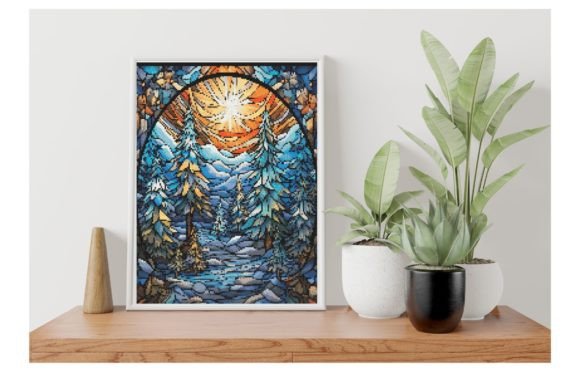
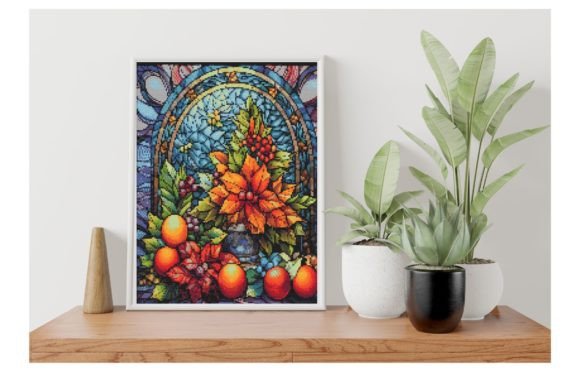
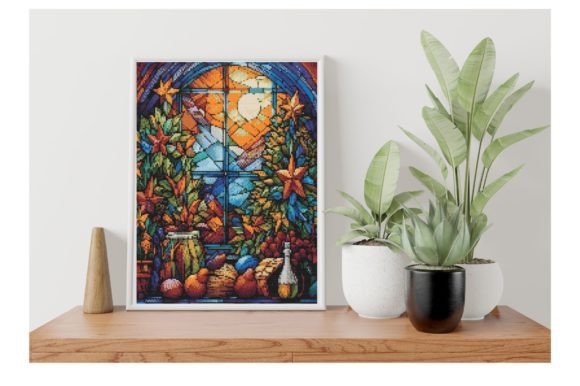
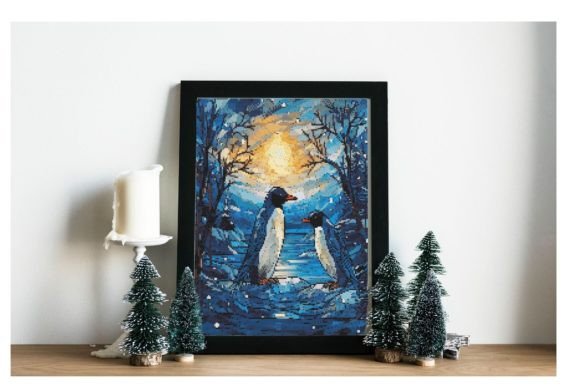
The visual personality of this design is distinct. Unlike traditional counted cross-stitch patterns that rely on soft gradients and pixelated shading, this set mimics the bold leading and vibrant color blocks of cathedral windows. The mood is undeniably wintry yet warm, capturing that specific feeling of watching snow fall from inside a cozy room. For a craft business owner or an Etsy seller, this aesthetic is gold. It moves beyond generic holiday clipart into something that feels like a curated art piece.
The layout typically features strong outlines that define the penguin shapes against a backdrop of geometric ice shards or snowflakes. This high-contrast approach is excellent for visibility. In a retail setting, whether it is a craft fair booth or an online shop, designs need to pop from a distance. The "stained glass" effect ensures that even if a customer is walking past a table of handmade goods, the bold lines of these penguins will catch their eye before they even see the intricate stitching.
Real-World Application: From Screen to Sweatshirt
To truly test the viability of the Stained Glass Penguins Cross Stitch, I mentally placed it onto several common products I create for clients. My first thought went to a heavy-weight cotton tote bag. Tote bags are a staple for small shop products, and they offer a flat, stable surface ideal for counted work. The rigid lines of the stained glass style would hold up beautifully here, resisting the distortion that sometimes plagues softer, circular motifs on flexible canvas.
I also considered this design for sweatshirt embroidery. While cross-stitch on knitwear can be tricky, the bold nature of this pattern makes it a strong candidate for a chest pocket accent or a large back panel on a fleece hoodie. The thick "leading" lines in the design act as a natural reinforcement, preventing the image from looking muddy when stitched onto textured fabric. However, one must be careful with stretchy fabrics. If you are adapting this for a tight-fitting garment, the density of the stitches required to fill those glass-like color blocks could cause puckering if the stabilizer isn't up to the task.
For those running a boutique focusing on nursery decor, this design shines as a pillow cover or a framed wall hanging. The whimsical subject matter appeals to parents, while the sophisticated color palette satisfies adult tastes. It bridges the gap between a child's toy and modern home decor, increasing the perceived value of the finished product.
Navigating Technical Challenges
No design is without its hurdles, and practical design judgment requires us to anticipate them. The primary concern with any "stained glass" style pattern is the stitch density. To achieve the look of solid colored glass, you often need long runs of uniform color. In cross-stitch, this means consistent tension is vital. If your tension varies, the "glass" will look streaky rather than solid.
Furthermore, the sharp angles inherent in this style demand precision. When working on curved surfaces like caps or hats, these geometric corners can distort easily. I would advise against using this specific pattern on a structured cap unless you are highly experienced with hooping and stabilizing curved items. The risk of the penguin's beak or the ice shards warping is too high for a professional result.
Fabric choice is another critical variable. This design relies on contrast. If you attempt to stitch this on a dark fabric without accounting for the background, the penguins may disappear. Conversely, on very thin fabric, the density of the thread needed to fill the color blocks might show through to the other side, requiring a lining or backing for items like aprons or kitchen towels that see frequent use and washing.
Commercial Viability and Brand Consistency
For the Etsy seller or creative entrepreneur, the Stained Glass Penguins Cross Stitch offers a unique selling proposition. Most holiday inventory is saturated with red and green Santas or snowmen. This design offers a cooler, more artistic alternative that can help a brand stand out. It suggests a level of sophistication in your handmade product lineup.
When creating printable mockups for your online listings, this design photographs exceptionally well. The defined lines translate clearly in digital images, reducing the chance of customers misunderstanding what they are buying. Clear product representation builds customer trust. If a buyer sees a crisp, bold image in your listing and receives a product that matches that clarity, you secure repeat business.
However, before listing this as a commercial embroidery asset or selling finished items, you must verify the licensing terms provided with the Cross Stitch Patterns. Some designers allow unlimited sales of finished physical goods but restrict the sale of the digital file itself. Always confirm these details to protect your business.
Practical Notes for the Studio
If you decide to move forward with this project, here is my recommended workflow to ensure professional results:
- Test First: Always stitch a small section on scrap fabric of the same weight and texture as your final material. This checks for color bleeding and tension issues.
- Check Contrast: View your thread choices in black and white. If the different shades of blue or gray blend together in grayscale, the "stained glass" effect will be lost.
- Stabilizer Strategy: Given the potential density of the fill areas, use a cut-away stabilizer for garments that will be washed frequently. Tear-away might not provide enough long-term support.
- Hoop Size: Ensure your hoop size accommodates the full pattern without cramming. Crowding the design can lead to fabric distortion.
- Lighting: Work under good lighting. The subtle shifts in thread color required to mimic light passing through glass are easy to miss in dim conditions.
In conclusion, the Stained Glass Penguins Cross Stitch is a robust design with significant potential for both personal gifts and commercial ventures. It demands respect for technique—specifically regarding tension and fabric choice—but rewards the maker with a visually striking result. Whether you are creating a personalized gift for a winter-loving friend or stocking your small shop with unique holiday inventory, this pattern provides a fresh, artistic angle on a classic seasonal theme. Just remember to treat the geometry with care, and your penguins will stand tall on whatever canvas you choose.